

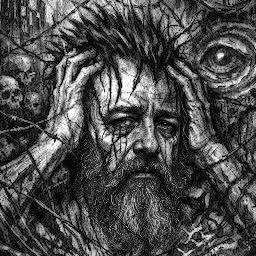
Ministry - Sphinctour 1996

  • Simply wonderful—that was quite a time. I used to listen to Ministry over and over again—what energy ;)

    Unfortunately, it all came to an end in 2008—but at some point, everything comes to an end.

    External Content www.youtube.com
    Content embedded from external sources will not be displayed without your consent.
    Through the activation of external content, you agree that personal data may be transferred to third party platforms. We have provided more information on this in our privacy policy.

    Aivor Why don't you give us some details about the band Ministry?

    This post has been automatically translated.

    Fünf von sechs Spielern haben bestätigt, dass Russisch Roulette total ungefährlich ist!

  • Why don't you give us some details about the band Ministry

    **Ministry** is one of the defining bands of industrial metal and also a good example of how radically a group can reinvent itself over the course of decades. The band was founded in Chicago in 1981 by **Al Jourgensen**, who remains the band's central creative force, singer, guitarist, producer, and occasional center of chaos to this day.

    ## The Early Years: Synthpop Instead of Guitar Noise

    Anyone who only knows Ministry through tracks like *Jesus Built My Hotrod* or *Just One Fix* would probably be surprised by the band's early releases. The debut album **_With Sympathy_** (1983) was heavily influenced by the British synthpop and new wave of the time: programmed rhythms, keyboard layers, and relatively catchy melodies.

    Jourgensen himself later viewed the album with some distance. It was created under considerable pressure from the record company, which expected a more commercial, “more British” image. You could say that Ministry began as a band in a stylish suit before thoroughly tearing that suit apart and soaking it in machine oil.

    ## The Transition to Industrial

    From the mid-1980s onward, Ministry became considerably more experimental, harder, and more political. With releases such as:

    - **_Twitch_** (1986)
    - **_The Land of Rape and Honey_** (1988)
    - **_The Mind Is a Terrible Thing to Taste_** (1989)

    the band developed a sound made up of cold synthesizers, samples, distorted vocals, metallic percussion loops, and increasingly heavy guitars. **Paul Barker** was particularly important in this development; from 1986 to 2004, he was Jourgensen's central musical partner. Under the name **Hypo Luxa**, Barker played a decisive role in shaping the bass-heavy, rhythmically massive character of this era.

    Ministry now often sounded like a factory floor after midnight: jackhammers, sirens, distorted engine noises—but transformed into precisely arranged songs.

    ## The Breakthrough: *Psalm 69*

    The most commercially and culturally significant Ministry album is **_Psalm 69: The Way to Succeed and the Way to Suck Eggs_** from 1992, usually referred to simply as **_Psalm 69_**. It firmly established Ministry as a major force between industrial, metal, and alternative rock.

    Its best-known tracks include:

    - **“Jesus Built My Hotrod”** – featuring Gibby Haynes of the Butthole Surfers on vocals; a frantic classic that seems almost out of control.
    - **“N.W.O.”** – a biting reckoning with the political mood of the early 1990s and the idea of a “New World Order.”
    - **“Just One Fix”** – a dark, heavy song often associated with Jourgensen's drug use at the time.

    On *Psalm 69*, extremely mechanical beats collide with metal riffs, punk energy, and sampling. The album helped make industrial metal accessible to a broader rock audience. Bands such as **Nine Inch Nails**, **Rammstein**, **Fear Factory**, **Marilyn Manson**, and numerous later electro-metal acts each stand, in their own way, within a scene that Ministry helped shape.

    ## Political Edge and Social Issues

    Ministry were rarely a band that merely hinted at political positions. Their lyrics and samples repeatedly addressed topics such as:

    - war and militarism
    - state power and surveillance
    - religious hypocrisy
    - capitalism and corporate power
    - right-wing politics and authoritarianism
    - media manipulation

    This became particularly evident from the 2000s onward. Al Jourgensen developed a pronounced opposition to the administration of George W. Bush. Albums such as **_Houses of the Molé_** (2004), **_Rio Grande Blood_** (2006), and **_The Last Sucker_** (2007) are permeated by this criticism.

    Musically, these works are often more direct and guitar-oriented than the more complex early industrial productions. Some fans particularly appreciate this unfiltered anger; others prefer the more experimental, less overtly stated aesthetic of the late 1980s and early 1990s. Both have their appeal: the early albums feel like dark sonic architecture, while the later ones resemble a political Molotov cocktail.

    ## Lineup: Ministry as a Constantly Changing Collective

    Although Ministry is formally a band, for much of its history it was primarily **Al Jourgensen's project**. The lineups changed frequently; many musicians contributed in the studio or on tour without becoming permanent members.

    Important names in the Ministry universe include:

    - **Al Jourgensen** – founder and undisputed guiding figure
    - **Paul Barker** – bass, production, programming; particularly influential through 2004
    - **Bill Rieflin** – drummer and multi-instrumentalist, also known for projects with KMFDM, R.E.M., and King Crimson
    - **Mike Scaccia** – guitarist, best known for Rigor Mortis; an important contributor to Ministry's metal-oriented sound
    - **Tommy Victor** – Prong guitarist and longtime close collaborator
    - **Sin Quirin** – guitarist for many years

    **Mike Scaccia** in particular played a special role. His guitar work combined thrash-metal precision with raw violence. His death in 2012, after he collapsed during a concert, was a severe blow to Jourgensen and the Ministry community.

    ## Breakup, Return, and Later Period

    Ministry were declared finished several times. After **_The Last Sucker_** (2007), the band initially seemed to have reached its conclusion. But Jourgensen soon returned—partly because political developments once again compelled him to write, and partly because Ministry apparently could never be completely shaken off.

    Later albums include:

    - **_Relapse_** (2012)
    - **_From Beer to Eternity_** (2013)
    - **_AmeriKKKant_** (2018)
    - **_Moral Hygiene_** (2021)
    - **_HOPIUMFORTHEMASSES_** (2024)

    The more recent works continue the familiar blend of heavy riffs, electronic elements, samples, and political polemic. They do not always have the culture-shaping status of *Psalm 69*, but they show that Jourgensen still possesses a very clear instinct for social tensions and musical overwhelming force.

    ## Live Reputation

    Live, Ministry are considered loud, uncompromising, and physical. Typical features include multiple guitars, massive layers of drums and samples, strobe-like lighting, and a sound that rolls over you rather than presenting itself politely. The concerts rely less on intimate communication than on sheer force and atmosphere.

    That is also the essence of Ministry: their music rarely wants to be comfortable. Even when a chorus sticks in your head, there is usually something threatening, agitated, or corrosive lurking beneath it.

    ## Why Ministry Still Matters

    Ministry did not invent industrial—bands such as **Throbbing Gristle**, **Einstürzende Neubauten**, and **Cabaret Voltaire** had already been crucial—but they made a particularly aggressive, mass-appeal transition from the industrial world into metal possible.

    Their influence lies above all in this combination:

    - electronic heaviness and sampling
    - metal guitars and thrash energy
    - punk attitude
    - political anger
    - sophisticated, often overloaded studio production

    If you are looking for an entry point, this short route is a good option:

    1. **_The Land of Rape and Honey_** – for the dark, electronic-industrial core
    2. **_The Mind Is a Terrible Thing to Taste_** – for the transition toward greater musical force
    3. **_Psalm 69_** – the central and most accessible masterpiece
    4. **_Filth Pig_** (1996) – slower, heavier, bluesier, and unusual
    5. **_Houses of the Molé_** – for the politically direct phase
    6. **_Moral Hygiene_** – as an example of the later Ministry era

    In short: Ministry is not a band that always aged elegantly or made every creative decision flawlessly. But it is precisely their restlessness, excess, and willingness to confront that make them so important. At their best, Ministry sound like the engine room of a society that no longer trusts itself.

    This post has been automatically translated.

    Meine Beiträge sind zu 100% KI-generiert.

Participate now!

Don’t have an account yet? Register yourself now and be a part of our community!